





Symptoms and Diagnostic Methods
Symptoms
Early symptoms of thyroid cancer are often very mild or completely absent. If you experience a persistent lump in the neck or ongoing changes in your voice, it is important to seek medical evaluation promptly.
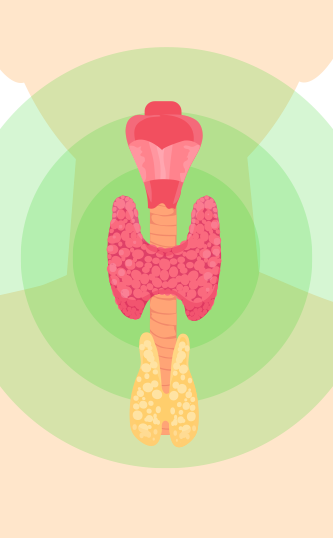
-
1
A Lump in the Front of the Neck
Most thyroid cancers cause no symptoms in the early stages. However, when the tumor grows larger than 2 cm, a firm lump or swelling may be felt in the front of the neck.
-
2
Pain or Discomfort in the Neck Area
Usually absent in the early stages, but as the cancer grows and invades or irritates surrounding tissues, pain or discomfort may develop.
-
3
Hoarseness or Voice Changes
If the tumor affects the recurrent laryngeal nerve, it may cause hoarseness or noticeable changes in the voice.
-
4
Difficulty Swallowing (Dysphagia)
If the cancer spreads toward the esophagus, it may cause trouble swallowing.
-
5
Difficulty Breathing
When the tumor compresses the airway around the thyroid, it can lead to breathing difficulties.
-
6
Enlarged Lymph Nodes in the Neck
If the cancer has metastasized to nearby lymph nodes, swollen lymph nodes in the neck may be noticeable.
Diagnostic Methods
-
Ultrasound Examination
Ultrasound is used to evaluate the size, shape, margins, and internal characteristics of thyroid nodules to assess the risk of malignancy.
-
Fine-Needle Aspiration (FNA) Biopsy
A thin needle is used to extract a small sample of cells from the thyroid nodule to determine whether cancer cells are present.
-
Core Needle Biopsy
If FNA results are inconclusive, a core needle biopsy may be performed. This procedure uses a larger needle to obtain a tissue sample, allowing for a more accurate diagnosis.
-
Blood Tests
Blood tests measure thyroid hormone levels and tumor markers to evaluate thyroid function. Calcitonin levels are particularly important for detecting the possibility of medullary thyroid cancer.
-
Neck CT Scan
A CT scan of the neck assesses the tumor's size and location, its relationship to surrounding tissues, and any lymph node involvement. This imaging is essential for accurate staging and complete surgical planning.